Materials
Timber selection and material characteristics in bespoke furniture making.
European Oak
Quercus robur and Quercus petraea. European oak is selected for its strength, stability, and distinctive grain character. The wood's colour ranges from pale brown to golden brown, with prominent medullary rays visible on quarter-sawn surfaces.
Oak is suitable for structural elements, visible surfaces, and joinery. It works well with both hand and machine tools, and accepts a variety of finishes. The wood's natural tannins can react with certain finishes, creating colour variations.
Timber is sourced from sustainably managed forests, with attention to grain orientation and figure. Boards are selected to match colour and grain pattern where required.
American Black Walnut
Juglans nigra. American black walnut is valued for its rich, dark brown colour and fine, even grain. The heartwood ranges from chocolate brown to purplish black, with lighter sapwood that may be included or excluded depending on the design.
Walnut is relatively easy to work, taking detail well and accepting finishes smoothly. It is used for furniture surfaces, drawer fronts, and visible elements where its colour and grain contribute to the piece's character.
The wood's colour deepens with age and exposure to light, developing a richer patina over time. Careful selection ensures consistent colour across a piece.
European Ash
Fraxinus excelsior. European ash is light in colour, ranging from pale cream to light brown, with a pronounced, open grain pattern. The wood is strong and flexible, making it suitable for curved elements and structural applications.
Ash works well with both hand and machine tools, though its open grain may require filling for very smooth surfaces. It accepts stains and finishes readily, allowing for colour modification if desired.
The wood's light colour and distinctive grain make it suitable for pieces where a lighter aesthetic is preferred, or where contrast with darker timbers is desired.
Brass Hardware
Brass hardware is used for handles, hinges, and other fittings. The material is selected for its appearance, which develops a patina over time, and for its workability, allowing for custom-made elements.
Handles may be custom-made to match the piece's design, or selected from existing hardware that complements the furniture. The scale and proportion of hardware are considered in relation to the piece's overall dimensions.
Brass may be left in its natural state to develop a patina, or finished with a brushed or polished surface. The finish is chosen to complement the wood and the piece's overall character.
Veneers
Veneers are used where large, flat surfaces are required or where particular figure or grain pattern is desired. Veneers are sliced from logs selected for their figure, allowing for book-matched or slip-matched panels.
Veneers are applied to stable substrates, typically plywood or MDF, ensuring flatness and stability. The substrate is selected to match the application, with consideration given to thickness and edge treatment.
The veneer's figure and grain direction are considered in the layout, creating patterns that enhance the surface's visual interest while maintaining consistency across the piece.
Finishes
Finishes are selected to protect the wood while enhancing its natural appearance. Oil finishes penetrate the wood, providing protection from within while allowing the wood's texture and grain to remain visible.
Wax finishes are applied over oil or directly to the wood, providing a soft sheen and additional protection. The finish is built up in thin coats, with each coat allowed to cure before the next is applied.
The choice of finish responds to the piece's use, the wood species, and the desired appearance. Some finishes darken the wood slightly, while others maintain its natural colour.
Sustainable Sourcing
Timber is sourced from sustainably managed forests, with attention to environmental impact and forest regeneration. We work with suppliers who share our commitment to responsible forestry practices.
The selection process considers not only the wood's appearance and properties, but also its origin and the sustainability of its harvest.

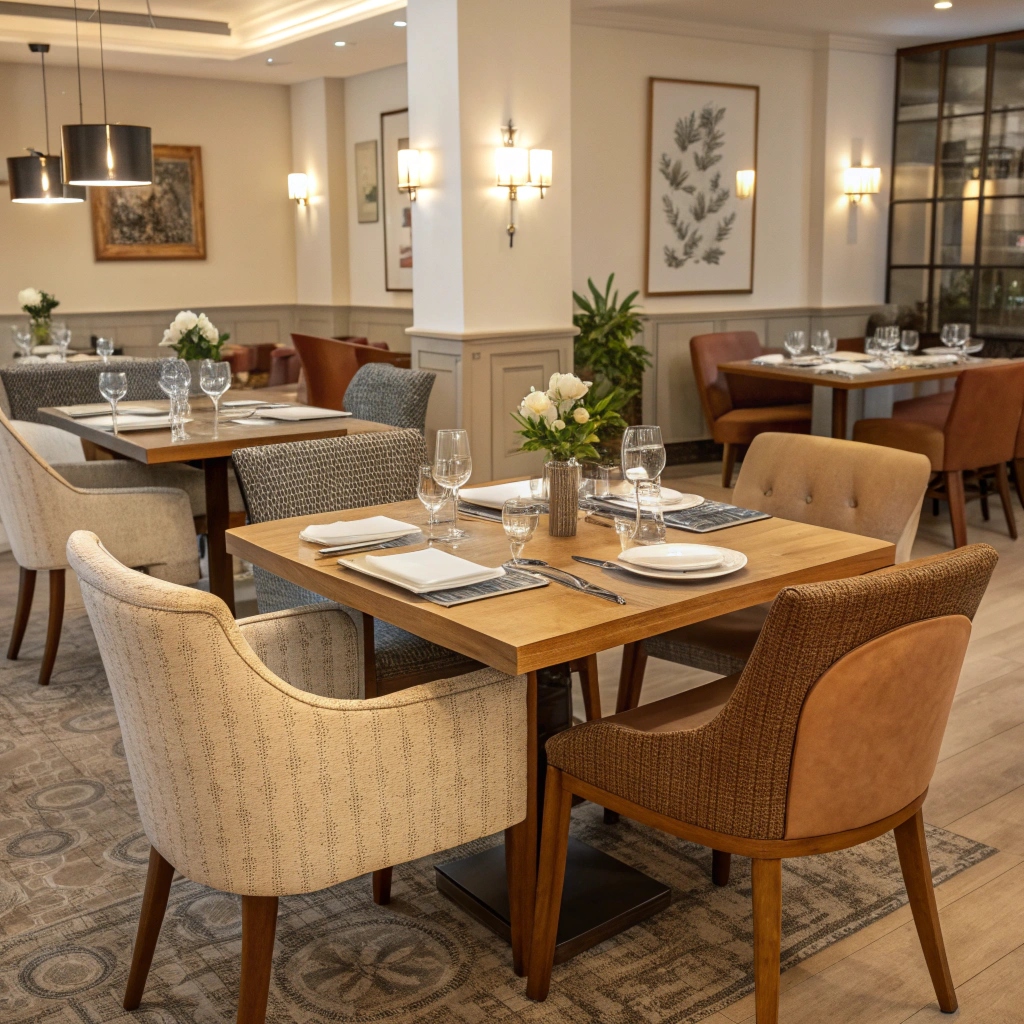
Material Character
Each wood species has distinct characteristics that influence its use. Grain pattern, colour, hardness, and workability all contribute to the material's suitability for specific applications.
Understanding these characteristics allows us to select materials that will perform well in their intended use while contributing to the piece's aesthetic character.
Material Combinations
Furniture often combines multiple materials, each selected for its specific role. Wood may be paired with metal hardware, glass, or other materials to create functional and aesthetic combinations.
The relationship between materials is carefully considered, ensuring that they complement each other while serving their intended functions.