Joinery Details
Traditional joinery techniques and craftsmanship approaches in bespoke furniture making.
Mortise and Tenon Joints
Mortise and tenon joints are used to connect frame members in furniture construction. The mortise is a rectangular or square hole cut into one piece, into which the tenon, a corresponding projection on another piece, is fitted.
The joint is designed to transfer loads effectively while maintaining alignment. The fit between mortise and tenon is precise, achieved through careful marking, cutting, and fitting. Wedges or pegs may be used to secure the joint, depending on the application.
This joint type is employed in table frames, chair construction, and door frames, where strength and stability are required.
Dovetail Joints
Dovetail joints are used in drawer construction and box making. The interlocking pins and tails create a mechanical connection that resists pulling apart. The joint's strength comes from its geometry rather than adhesives alone.
Dovetails are cut by hand using chisels and saws, or with the assistance of router jigs for consistency. Hand-cut dovetails show the maker's skill and allow for variation in spacing and proportion that responds to the piece's scale.
The visible dovetails on drawer fronts are considered a mark of quality craftsmanship, demonstrating attention to detail and traditional making methods.
Frame and Panel Construction
Frame and panel construction is used for doors, sides of cabinets, and large surfaces. A frame of stiles and rails surrounds a panel that floats within a groove, allowing for wood movement while maintaining a flat surface.
The frame members are joined with mortise and tenon joints. The panel may be solid wood, veneered, or made from other materials. The panel's edges are shaped to fit the groove, with a small gap allowed for expansion and contraction.
This construction method accommodates the natural movement of wood in response to changes in humidity, preventing warping or splitting of large surfaces.
Hand-Finished Surfaces
Surface finishing is carried out by hand using planes, scrapers, and abrasives. The process begins with flattening and smoothing the wood surface, removing machine marks and preparing it for the final finish.
Hand planing produces a surface that reflects light differently from sanded surfaces, creating a subtle sheen that reveals the wood's grain. Scrapers are used to refine the surface further, removing any remaining tool marks.
The final finish may be oil, wax, or a combination of treatments, applied by hand and built up in thin coats. Each coat is allowed to cure before the next is applied, with light abrasion between coats to ensure adhesion and smoothness.
Drawer Construction
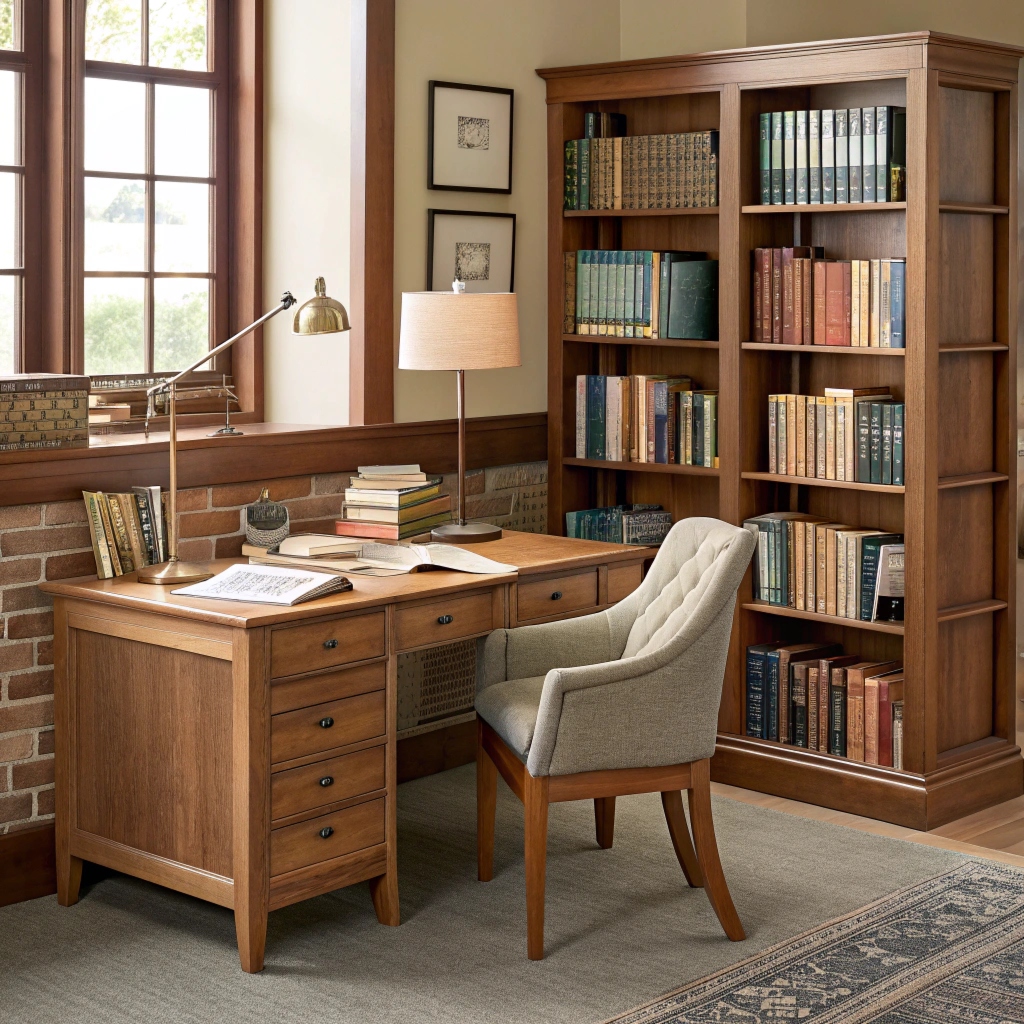
Drawers are constructed with attention to fit, function, and durability. The drawer box is made from solid wood or plywood, with dovetail joints at the corners. The bottom panel is set into grooves in the sides and front, allowing for wood movement.
Drawer runners and guides are fitted to ensure smooth operation. The fit between drawer and opening is precise, with small clearances that allow for movement while preventing rattling or binding.
Drawer pulls or handles are positioned to provide comfortable access and to complement the piece's overall design. They may be custom-made or selected from existing hardware, with consideration given to scale and material.
Leg and Base Construction
Table and furniture legs are shaped to provide visual weight and stability. The leg's profile responds to the piece's overall character, from simple turned forms to more complex tapered or shaped legs.
Legs are joined to the top or frame using mortise and tenon joints or other appropriate connections. The joint is designed to resist the loads imposed by the piece's use, with consideration given to leverage and stress points.
Bases may include stretchers or aprons that connect the legs, providing additional stability and contributing to the piece's visual structure. The relationship between legs and top is carefully considered to achieve balance and proportion.
Joint Strength
The strength of joinery joints comes from their geometry and the precision of their fit. Well-cut joints transfer loads effectively, ensuring the piece's structural integrity over time.
Traditional joint types have been refined through centuries of use, with each type suited to specific applications. The choice of joint responds to the loads it must bear and the aesthetic requirements of the piece.

Tool Techniques
Hand Tools
Traditional hand tools allow for precise control and the development of hand-finished surfaces. Chisels, planes, and saws are used to cut and shape joints with accuracy.
Machine Tools
Modern machinery prepares materials efficiently and cuts joints with consistency. The combination of machine and hand work ensures both accuracy and character.